Five AGAI surfaces consolidated into one record: executive leadership and AI-infrastructure strategy, the DoD-edition technical showcase, the Pocket Ground Station programme, the GODEYE investor brief and the Signal 100 report.
Consolidated dossier · REV 05 / 2026 · Virginia · Taiwan · Malaysia
The five pages below are merged in full. Each retains its own evidence boundary, terminology, and disclosure language exactly as published on its source surface.
Global Executive Director of AGAI Group and A20.ai. AI Gateway, enterprise software, GPU server infrastructure, semiconductor intelligence, and global hardware brand strategy.
Fifteen-chapter evidence dossier: live pass telemetry, the vLLM/SGLang agent console, the Longbow orbital bus, unit economics and the PQC security plane.
Regional satellite specifications, multi-band SDR front ends, the MIT Space-ESP32 sovereign chip platform, the LINLINk drone gateway and a twelve-module global roadmap.
Tri-band reception, ESP32-S3 deterministic control, GODEYE track intelligence, resilient mesh delivery and a post-quantum security path. 2026 POC, US$5M ask.
One hundred AI-simulated specialists stress-test the agent-directed engineering cell, the AGAI Chip roadmap, FORMOSAT-8 field notes and an applied Markov equation atlas.
Cross-domain integration is becoming a core competitive capability.
A U.S.-based technology group working with partner organizations across the stack.
Technology creates leverage when its dependencies are visible.
Public / auditable. Simulated telemetry is labelled at every surface.
A full-length presentation of Joel Lin's professional positioning, product-definition philosophy, infrastructure research system, and daily AI technology intelligence practice.
The latest supplied profile is reproduced below without omission. The index covers every major capability, research domain, benchmark, governance question, model-replacement principle, daily intelligence module, and positioning statement.
A year-by-year archive for invention and recognition records. Every published entry is separated by evidence status; pending items remain visibly open until an official source is supplied. A structured record of the milestones that connect innovation, commercialization, and public recognition.
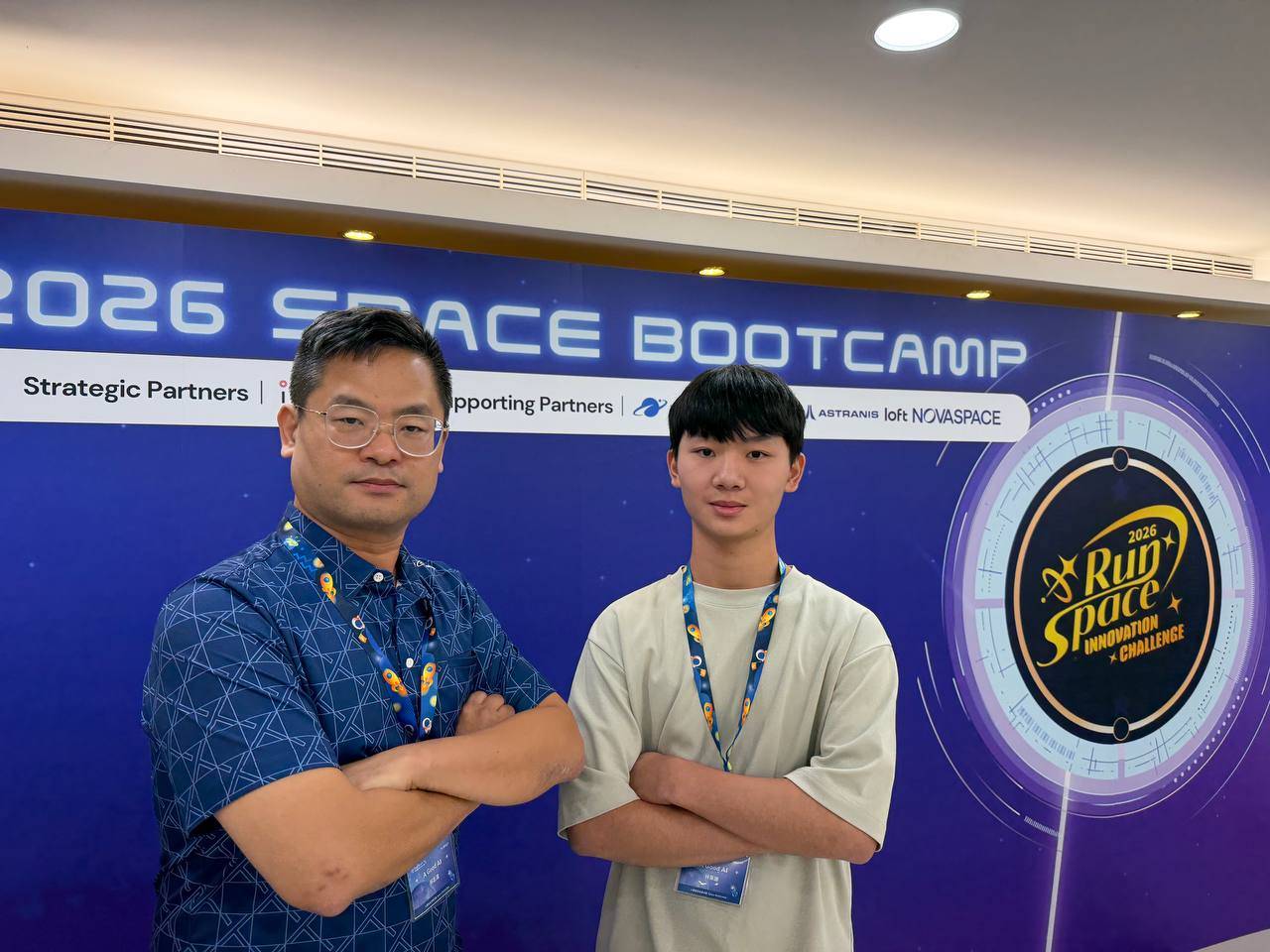
User-supplied record: the team advanced in the 2026 RunSpace global competition with a concept for chip-assisted design supporting space technologies. The result remains awaiting the official shortlist, certificate, or organizer announcement.
Award recognition listed in the supplied professional record.
Recognition listed in the supplied professional record for generative-AI applications across industries.
Accelerator participation listed in the supplied professional record.
Three consecutive years.
Joel Lin reports being selected as a finalist in the Ministry of Economic Affairs national innovation competition for three consecutive years. The exact years, official category, and organizer records remain pending verification.
Public reporting associates Joel Lin with a founding team recognized through Taiwan's startup and innovation ecosystem. The public record is presented conservatively and does not expand the individual award title beyond what the source supports.
THF.ai is positioned as a U.S.-based AI-EDA deep-tech company building an auditable, controllable, and deployable agent layer across specification, RTL, verification, PPA analysis, multi-physics, and data-center thermal design.
Generate, test, trace, debug, and verify hardware descriptions through iterative agent workflows.
Connect design decisions to power, performance, and area signals rather than isolated code output.
Extend reasoning from die and package to board, server, rack, and AI data-center constraints.
Prioritize auditability, IP protection, human control, and deployability in private environments.
THF.ai is a U.S.-based AI-EDA deep-tech company with a multidisciplinary team that includes dozens of Ph.D.-level employees educated at Texas universities.
This statement reflects the user-confirmed team relationship. It does not claim that the company was founded by a university, that a university endorses the company, or that every team member is a co-founder.
The team is presented as selected / advanced in the 2026 RunSpace Innovation Challenge with a concept focused on chip-assisted design for space technologies.
The team result remains marked for official verification; this page does not describe the team as a winner without an official result.
A diligence-oriented manuscript canvas for THF.ai's U.S. AI-EDA and silicon-to-system thesis. A long-form English research brief spanning the U.S. IC-design landscape, AI-EDA strategy, agentic RTL, chiplets, multi-physics, trusted deployment, product architecture, competitive differentiation, business model, and a 24-month roadmap.
The strategic distinction is not a promise to replace every established EDA workflow. It is a proposal to coordinate different models, EDA tools, simulators, metrics, and engineering approvals in an auditable agent loop. That thesis must be validated through reproducible benchmarks, workflow integrations, security controls, and customer evidence.
Separate technical evidence from commercial claims.
Treat IP security and deployment control as core product design.
Mark user-supplied and pending claims for diligence.
CHIPS and Science Act funding described by the U.S. Department of Commerce.
Proposed CHIPS for America funding across 16 states, as reported by Commerce.
SIA projection for U.S. domestic semiconductor manufacturing capacity, 2022–2032.
SIA projection for U.S. share of global advanced-logic capacity below 10nm by 2032.
THF.ai's proposed coordination layer sits across these transitions: it would not replace each specialist tool, but make assumptions, evidence, metrics, and approval gates more traceable from silicon intent to deployed infrastructure.
Filter the qualitative map by company type or technology domain. This is not a revenue ranking, market-share estimate, or claim that each participant owns every marked layer.
| Representative role | Type / domain | Design / EDA | Compute / ASIC | System pull | Evidence |
|---|---|---|---|---|---|
| EDA incumbents | Verification · Compute · Package · System | Core | Use / customize | System | PUBLIC SOURCE |
| ASIC design specialists | Workload-specific chips tied to cloud-scale systems. | Integrate | Core | Project-specific | PUBLIC SOURCE |
| Custom silicon delivery | Schedule, PPA, and tape-out risk. | Integrate | Core | Project-specific | PUBLIC SOURCE |
| AI-EDA research | Research · AI-EDA · Multi-Physics | Research | Coordinate | All layers | RESEARCH INFERENCE |
| THF.ai coordination layer | Auditable reasoning across tools, metrics, simulation, and approval gates. | Coordinate | Coordinate | All layers | USER-SUPPLIED |
The 2026 THF Group Technology Application Forum (ATAF) brings communications, semiconductor physics, and smart healthcare into one cross-domain operating conversation. It is presented as a U.S.-based company group platform supported by a collaborative R&D network of hundreds of engineers, researchers, and partner organizations.
The three pillars are not isolated tracks. Together they describe a systems view: signals move through networks, compute is constrained by physical materials and packaging, and applied intelligence earns value only when it reaches real workflows.
For conversations around AI infrastructure, GPU servers, enterprise software, product definition, or global technology positioning.
Contact us[email protected]Decentralized satellite communications through edge AI and NVIDIA accelerated computing — from a $78 Arduino receiver to sovereign GB300 mission networks.
AGAI-26 · Secure edge constellation
Nominal
Verified
Simulated
AGAI secure edge data path from pocket ground station through LEO relay to GB300 sovereign compute · REV 05 / 2026
Russia · Japan · Republic of Korea · United States. Frontend simulation of SDR telemetry; source adapter: RTL-SDR / TLE / SGP4 pending.
Project System Specification / Evidence Dossier
15 technical chapters · review surface / AGAI-26
| Satellite | NORAD | Mode | Frequency | Max El. | Region / orbit |
|---|
Click a row to pin the active satellite · USB/IQ capture stream nominal
You are AGAI DoD Tactical Agent OS. Enforce Zero Trust, PQC ML-KEM/ML-DSA verification, and real-time SDR signal threat assessment.
Analyze LEO satellite downlink telemetry at 137.9125 MHz and assess anomaly probability.
X-AGAI-Root-of-Trust: VERIFIED
X-AGAI-PQC: ML-KEM-1024 / ML-DSA-87
X-AGAI-Demo-Mode: simulated
| Concurrency | Aggregate Throughput | Single-Stream Mean | MTP Advantage |
|---|---|---|---|
| 1 (Single) | 31.2 tok/s | 15.6 tok/s | Baseline |
| 4 (Default) | 54.6 tok/s | 13.7 tok/s | Speculative decoding gain |
Both cards reuse the exact same System Prompt and User Prompt. Values are deterministic demonstration benchmarks selected for the current concurrency setting; they are not live runtime measurements. P50 represents the typical request, while P95 and P99 expose queueing, scheduling, and cache-tail behavior in this deterministic simulated benchmark.
Metrics tracked per model: Throughput (tok/s), Latency, GPU Load, Accuracy, and training state.
The tier architecture and the payload-adapter description are held once, in the evidence dossier above — chapter 02 and chapter 14. This section carries the per-module interface, power and reliability data that sits behind them.
15 technical chapters · review surface / AGAI-26 · SECURE EDGE EVIDENCE // FILE 0
Regulates 5V, 9V, 12V and manages solar arrays yielding up to 200W orbit average and 1100W peak power. The Hub Power Module handles advanced solar array regulation and battery charge/discharge cycles. It supplies robust, regulated 5V, 9V, and 12V rails to power high-performance edge compute nodes and RF transmitters concurrently during peak pass windows.
Advanced Attitude Determination and Control System (AOCS) providing sub-degree pointing precision via star trackers, reaction wheels, and magnetorquers. Ensures high-gain X-band antenna tracking stability during high-bandwidth LEO downlink sessions.
NVIDIA GB10 edge AI compute core running TensorRT-LLM, real-time SDR denoising, and PQC encryption. The core intelligence of AGAI Mission Control. Deploys NVIDIA GB10/GB300 architecture to execute complex-valued CNN signal denoising, TensorRT-LLM sovereign agent inference, and Post-Quantum Cryptography (ML-KEM/ML-DSA) encapsulation at the edge.
X-band high-speed downlink up to 1.12 Gbps and S-band omnidirectional TT&C interfaces. High-throughput software-defined radio gateway supporting X-band payload downlink at up to 1.12 Gbps alongside S-band omnidirectional TT&C. Seamlessly integrates with onboard AI semantic extraction to transmit compressed intelligence rather than raw IQ streams.
Bus interfaces: Ethernet · SpaceWire · LVDS · 32-37V Unregulated Bus
The cost case and the Tier 1 bill of materials are held once, in the evidence dossier above — chapter 01 · Executive Summary / Cost Revolution and chapter 03 · Tier 1 $78 BOM Analysis. This section carries the per-mission breakdown and the investor scenario model.
Tracked alongside Token Platform metrics: Tokens/Sec, Cost/Token, Compression, Mission Cost.
Non-participating investors receive the greater of preference claim or as-converted proceeds. Participating investors receive preference first and then share the residual. Debt seniority, multiple preference classes, caps, fees, taxes and legal terms are excluded.
Signal custody preserved
NVIDIA accelerated inference
PQC / ROOT VERIFIED
NOAA-18 decode
5-Node deployment
Regional nodes
100 vessels
1000+ nodes
AGAI-26 / REV 05
Detailed orbital parameters, payload instrumentation, downlink formats, and hardware requirements for the selected regional satellite source.
Russia meteorological & earth observation · ROSCOSMOS / SRC PLANETA
V-Dipole or QFH Antenna + RTL-SDR / LNA (Gain > 12 dBi)
Japan Meteorological Agency (JMA) / National Meteorological Center
1.2 m – 1.8 m Grid Dish + L-band Downconverter (1.69 GHz)
KARI / NMSC — National Meteorological Satellite Center
1.5 m L-band Parabolic Dish + Low Noise Block (LNB) Downconverter
No stable carrier lock has been confirmed for this pass. The receiver is still searching the configured downlink window.
The measured signal-to-noise ratio is below the recommended operating margin. Frame integrity may degrade.
Past receive anomalies, operator interventions, and restored link states across the selected regional source.
Link states: ACQUIRING · DECODING · MARGINAL · Signal mode · Max elevation · Frame decode · SNR quality
Designed for industrial drone docking stations (Hangar / Docking Station), LINLINk Drone Connect Box installs adjacent to the hangar to safely pipe multi-sensor telemetry and payload data directly into corporate private environments without public cloud exposure.
Secure data pipeline architecture — end-to-end UAV telemetry to AIDC GB300 analytics flow.
Hard-blocks direct connections between industrial drones and the public internet. All telemetry, video feeds, and mission logs are routed through military-grade encrypted tunnels straight to on-premise servers.
Enforces strict sovereignty at the exact data ingestion point. Industrial fleet operators retain 100% autonomous ownership over raw telemetry and sensor streams, preventing unauthorized third-party cloud leakage.
Seamlessly bridges industrial drone infrastructure with AGAI's industrial automation ecosystem, piping real-time aerial intelligence straight into AIDC GB300 high-performance AI inference workflows.
AGAI Pocket Satellite Triple-Band SDR Exploded View Schematic · MIT-CONCEPT CONTROL CHIP (ASIC + RISC-V). Select hardware layers to inspect Bill of Materials (BOM) & pin definitions.
BOM fields: PART NUMBER · DESCRIPTION · SPECIFICATION · VIEW PIN MAP · PACKAGE FORMAT · PINOUT ASSIGNMENT MAP
Normalized baseband-equivalent samples drive the waveform, FFT, and waterfall views in real time.
MIT Space-ESP32: High-Reliability Space-Grade Architecture.
Implement chip logic on Xilinx or Intel FPGA using OpenHW Group RISC-V architecture. Verify SDR demodulation algorithms (Meteor-M, GK-2A, Himawari) via RTL.
Utilize National Applied Research Laboratories (NARLabs) TSRI mechanism to execute multi-project wafer (MPW) tape-out using UMC 55nm or TSMC 40nm process nodes.
Integrate the fabricated chip into academic-industrial 1U/3U CubeSats for LEO space environment testing and orbital signal reception verification.
LINLINk Connect Box integration with autonomous industrial drone fleet & satellite C2.
Made in Taiwan (MIT) architecture replacing commercial ESP32 for orbital defense.
Hardware-accelerated lattice-based encryption for quantum-resilient satellite links. As quantum computing advances, traditional RSA/ECC encryption on orbital links becomes vulnerable to Shor's algorithm. The MIT Space-ESP32 integrates a dedicated hardware PQC coprocessor running CRYSTALS-Kyber for key encapsulation and Dilithium for digital signatures.
All telemetry and drone control packets passing through the LINLINk Connect Box are encrypted at the edge before entering public or private tunnels, ensuring absolute sovereign data ownership.
Status: hardware accelerated enclave · zero-trust isolated. Compliance: EU Data Act & defense-grade zero exposure. Throughput tester packet sizes: 1 KB telemetry frame · 4 KB command packet · 16 KB payload block.
Bridging the 12× frequency span between LEO VHF (137 MHz) & GEO L-Band (1.69 GHz).
Interactive LNA gain & noise figure (NF) tuner: adjust front-end gain to simulate noise figure, cascade sensitivity, and saturation margin.
| Channel | Satellite / Orbit | Freq | LNA Gain | Est. NF | Ant. Gain |
|---|---|---|---|---|---|
| VHF | Meteor-M N2 / LEO | 137 MHz | 12 / 18 / 26 dB | < 0.8 dB | 3.2 dBi |
| L-Band | Himawari-9 / GK-2A / GEO | 1.69 GHz | 24 / 32 / 40 dB | < 0.6 dB | 15.0 dBi |
Additional matrix columns: BPF / SAW Loss (dB) · RF Switch Loss (dB) · ADC / SDR Input Margin (dB). Conceptual RF front-end worksheet; not a calibrated field measurement. Gain and NF values are interactive concept estimates for architecture exploration. Validate with calibrated RF measurements before hardware sign-off.
LEO orbits (e.g. Meteor-M at ~820 km) induce rapid carrier frequency shifts (up to ±4.2 kHz at VHF). The MIT Space-ESP32 executes TLE/GNSS/INS-assisted feed-forward prediction to pre-tune NCOs prior to signal acquisition.
An Extended/Unscented Kalman Filter simultaneously estimates Carrier Frequency Offset (CFO), Doppler rate, sampling clock drift, and propagation delay jitter to maintain robust lock during high-velocity passes.
High-speed NVMe edge buffering & air-gapped local ingestion pipeline. The GB10 Local Data module intercepts drone and satellite telemetry at the edge, storing raw IQ streams and multispectral imagery in encrypted NVMe cache pools before routing. Ensures industrial drone fleets and ground stations retain absolute local ownership of telemetry, blocking unauthorized third-party cloud leaks at the collection point.
AIDC GB300 neural processing for real-time satellite & UAV intelligence.
Explore the 12-slide strategic blueprint for establishing sovereign defense hubs, quantum-resistant security, and scalable multi-band satellite C2.
AGAI is executing a targeted global expansion strategy to establish direct operational presence in key defense and aerospace capitals worldwide. By positioning localized subsidiaries near allied government C2 nodes, we ensure direct interoperability, regulatory compliance, and rapid tactical deployment.
Anchored in Northern Virginia, our primary operations center leverages immediate proximity to the Pentagon, defense primes, and intelligence agencies. This strategic location accelerates our integration into allied tactical C2 networks and provides a secure foundation for North American scaling.
Our planned European regional hubs in Brussels and Berlin are structured to address strict European data sovereignty mandates, including the EU Data Act and GDPR. These centers provide air-gapped processing nodes that guarantee enterprise and defense data remains exclusively under regional ownership.
Positioned in Taipei and Tokyo, our Indo-Pacific hubs address high-density maritime traffic, typhoon monitoring, and regional defense telemetry. These offices coordinate multi-band meteorological satellite downlinks (Himawari-9, GK-2A) and support allied maritime security operations.
Prototype validation and technical de-risking.
TSRI tape-out for MIT Space-ESP32 RISC-V SoC, European/Indo-Pacific hub rollout, and volume LINLINk deployments.
CubeSat orbital flight testing, full-scale AIDC GB300 AI integration, and global defense contractor scaling.
Collaborative innovation framework with 1,000+ aerospace partners.
Defeating harvest-now-decrypt-later cyber threats.
Uniting satellites, drones, and sovereign AI at the edge.
Use the interactive simulation parameters to model AGAI projected revenue, gross profit, and implied valuation multiples across different global expansion stages and deployment scales. Inputs: Expansion Stage (Phase 1 2026 / Phase 2 2027 / Phase 3 2028+), Valuation Multiple (× Revenue), Funding Amount (USD), Investor Dilution (%) — capped at 49% for this scenario model.
Executes one bounded task.
Never fixes it; attacks assumptions.
No move without counterevidence.
Confident failures become memory.
| Claim ID | Active claim | Evidence edge / what must be defended | Cost |
|---|---|---|---|
| SIG.GK2A.004812 | GK-2A L-band frame | SNR 15.2 dB · potential stale-clock acceptance. Gate held: clock drift evidence required. | 4.2 CPU ms |
| FLOOD.GUAYAS.00091 | Flood tile classifier | VH change +8.1 dB · AOI valid · no active scar. CONTINUE | 2.8 CPU ms |
| UAV.DOCK.0187 | Docking approach | GNSS stale 11 s · battery margin 18% · route confidence collapse. Scar ledger indexed. | 7.6 CPU ms |
| PQC.CMD.1192 | PQC command envelope | ML-KEM session valid · ML-DSA verify pass · anti-replay check passed. | — |
RECEIVE NORMAL · TRANSMIT EMERGENCY
The sticker behaves as a low-energy telemetry and sensing endpoint. It wakes on policy, compresses locally, and receives network state without carrying a full-size Satellite Box burden.
UAVs, USVs, rescue vehicles, and supply containers can become mobile relays. The local mesh routes critical status toward an available NTN path instead of assuming fixed infrastructure is still alive.
Heterogeneous backup logic escalates the node from passive receive into an authorized transmit path under a hardened command boundary.
Engineering reference media: prototype board close-up · underwater enclosure concept · bench assembly and wiring · PCB top layout reference · PCB routing reference · layered routing reference.
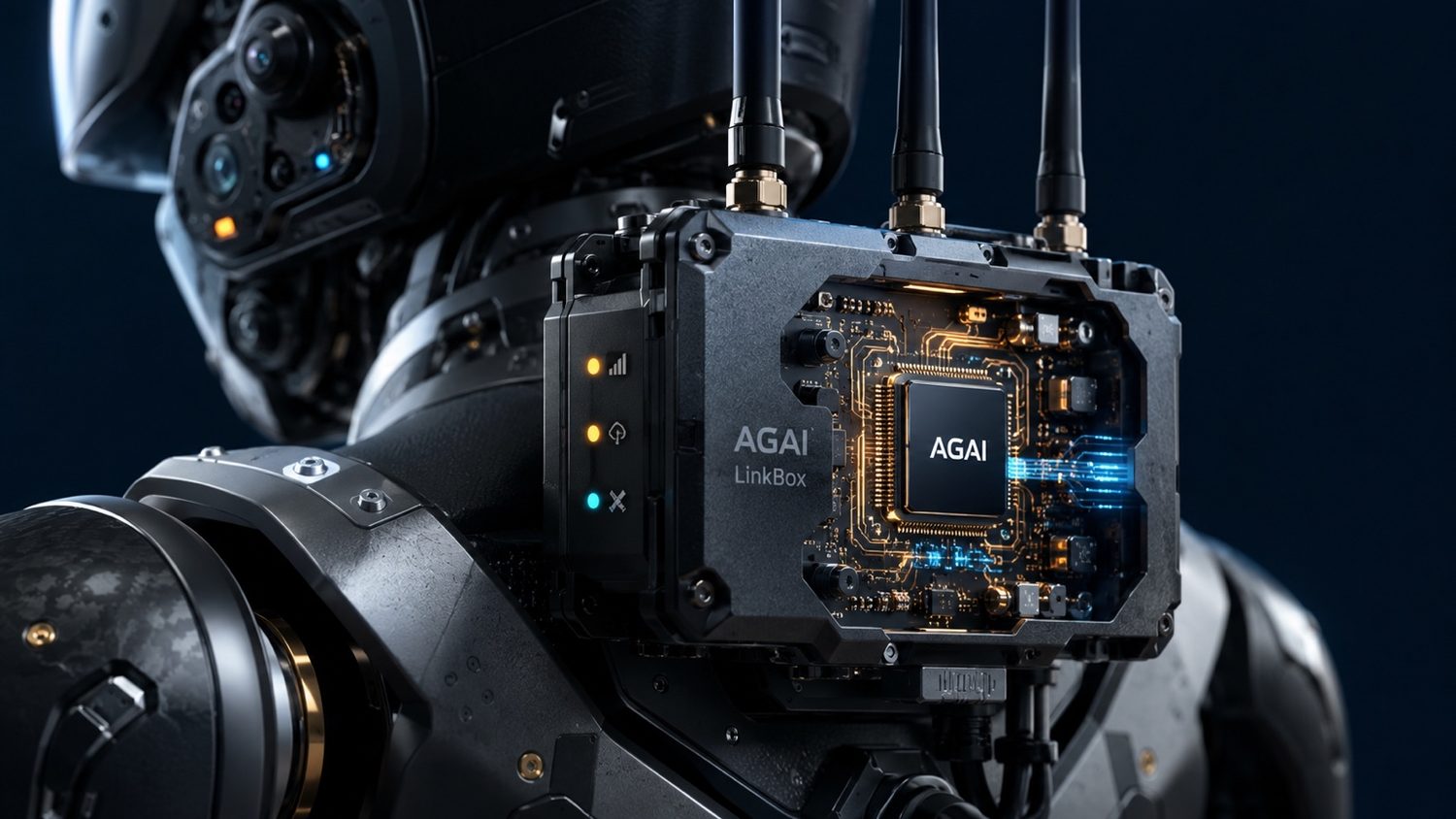
AGAI LinkBox combines tri-band reception, ESP32-S3 deterministic control, GODEYE track intelligence, resilient mesh delivery and a post-quantum security path.
LinkBox closes a defined operational gap: critical signals may be visible from orbit while remaining unavailable to field decision-makers when terrestrial networks fail.
Three RF domains, one control plane, one secure data lifecycle.
Paid field proofs convert into hardware, software, data and compute contracts.
Edge filtering converts raw radio data into compact, actionable alerts.
The same control layer scales from ports and farms to sovereign and orbital AI.
137.9 MHz · LEO weather and telemetry. V-dipole or QFH antenna → band-pass filtering → low-noise amplification → SDR capture → Doppler-aware decode.
This local demonstration shows how an agent can interpret GODEYE tracks, RF health and mission policy. It does not send external commands.
AGAI FIELD AGENT · Policy-bounded · evidence-first — select a mission question to generate an evidence-linked recommendation.
Controlled-information practices, evidence and supplier accountability.
Provenance, signed builds and protected software delivery.
Post-quantum key establishment and signatures with efficient data-plane encryption.
Continuous authorization; network location never implies trust.
Phishing-resistant operator authentication and device-bound credentials.
Telemetry and mission data protected between authorized endpoints.
Security target and evaluation-assurance pathway for product claims.
Device identity → PQC session → E2EE data → policy check → signed result.
Vehicle, vessel or drone edge node with control, sensing and mesh.
Tri-band field gateway with RF front ends, SDR and local AI.
Fleet management, APIs, AI return path and GB300 compute.
| Planning lens | Deployment scale | Hardware scenario |
|---|---|---|
| TAM planning model | 100,000 deployable nodes | US$450M before software and services |
| Initial SAM | 10,000 nodes + 500 gateways | US$59M across ports, fleets and field sites |
| Five-year SOM | 4,000 nodes + 150 gateways | US$22.2M plus recurring services |
Ports, research, agriculture, maritime and defense integrators.
Signal quality, decode success, mobility, power and delivery latency.
Nodes, gateways, management software, data and compute services.
Planning estimates depend on POC conversion, certification, supply availability and procurement cycles.
Filter by decision lens, then open any answer. Each response distinguishes a current POC capability, a validation target and a longer-term roadmap item.
Capital is tied to measurable technical and commercial de-risking.
| Allocation | Use of funds |
|---|---|
| US$1.75M | Custom silicon and RF engineering |
| US$1.25M | Field prototypes and test campaigns |
| US$1.00M | Software, AI pipeline and security |
| US$0.60M | Certification and manufacturing readiness |
| US$0.40M | Mission sales and partnerships |
Satellite intelligence for all.
AGAI Editorial Lab · September 2026 · 12 min read
One hundred synthetic specialists stress-test AGAI's thesis: use coding agents to compress research, integration and verification — while humans retain safety, authorization and accountability.
AI-simulated interviews
Technical & procurement domains
Portrait allocation: White / Asian / Black
Repetitive-work reduction target — not a measured result
Satellite systems span RF, spectrum, embedded security, orbital data, edge AI, procurement and certification. The bottleneck is often the human effort required to connect every layer.
AGAI's proposed answer is an agent-directed engineering cell: a senior human sets the architecture, permissions and acceptance tests; specialized agents search, write, simulate, test and monitor. This can radically compress bounded digital work, but it does not replace licensed radio engineering, field validation, cryptographic review or accountable public decisions.
One accountable lead. Ninety-nine task agents.
Management hypothesis for repetitive analysis, documentation and software verification — not a claim that 99 real jobs disappear.
Manual literature review, hand-built test matrices, siloed logs, delayed integration, knowledge lost between vendors.
Machine-assisted research, generated code, automated tests, traceable decisions and human-gated deployment.
Filter by domain. Cards with a highlighted border carry the full simulated response from the source report.
Adapted from the user-provided coding-agent workflow: iterative, evidence-led and gated by human judgment.
Research, experiment, understand the system, write the specification and interrogate assumptions.
Build with calibrated autonomy. Test behavior, security, architecture and user flows.
Use CI/CD and human gates. Let agents watch logs, propose repairs and re-enter the loop.
Balance speed, cost, risk and human effort.
Set scope, permissions, context and stop conditions.
Design tests that prove the intended outcome.
Curate skills, tools, MCP servers and standing context.
Recognize retrieval, context and agent failure modes.
From LinkBox to national infrastructure.
The supplied technical material has been translated, restructured and rebuilt as native full-width web content. It informs the AGAI architecture; it is not displayed as downloadable source imagery.
| Domain | Before | Now | Signal |
|---|---|---|---|
| AI Compute | GPU | GPU + ASIC + Chiplet | Cloud providers increasingly develop proprietary AI accelerators. |
| Advanced Packaging | Packaged chip | 2.5D · 3DIC · SoIC · FOPLP | Packaging becomes part of the system architecture. |
| Memory | DDR / NAND | HBM4 · CXL · AI SSD · CIM | The memory wall is now an AI performance constraint. |
| Interconnect | Copper | Silicon Photonics · CPO | Moving data can consume more energy than computing it. |
| Power & Thermal | Discrete cooling | Power Delivery · Liquid Cooling · STCO | Available power increasingly defines the ceiling of AI compute. |
| Manufacturing | Automation | Agentic AI · Digital Twin · Autonomous Fab | The smart factory is evolving into a thinking factory. |
| Physical AI | Edge AI device | Robot · Edge AI · Sensor · Semiconductor | AI is moving from the data center into the physical world. |
The former race: 7 nm → 5 nm → 3 nm → 2 nm → A14. Shrinking line width increased transistor density and performance.
The new bottlenecks: memory bandwidth · chip-to-chip bandwidth · power delivery · cooling capacity · rack-to-rack communication.
Progression: Past CPU/GPU process scaling → Now GPU + HBM through CoWoS → Next Chiplet + HBM + 3DIC + CPO → Destination AI system / AI factory.
AGAI implication: design the chip, RF path, memory, packaging, security and edge software as one verified system.
AGAI Chip direction: the secure element, PQC accelerator, RF-control interface and trusted memory path must be planned with the package from the first design review.
A fast GPU still waits when data cannot arrive in time. The constraint propagates through memory bandwidth, chip-to-chip links, power delivery, cooling and rack communication.
*Representative single-stack figures in the supplied material; final performance depends on product configuration. Strategic technologies: HBM4, CXL, AI SSD, computational storage, in-memory computing and MRAM.
AGAI implication: PQC acceleration must be measured against memory traffic, buffer limits and end-to-end energy — not only cryptographic operations per second.
Compute → HBM → chiplet/switch → photonic engine → optical fiber → other AI compute. Converting electrical signals close to the package supports die-to-die, chip-to-chip and rack-to-rack communication.
AGAI implication: future secure links may require PQC-aware optical endpoints and auditable key handling across rack-scale fabrics.
GPU: flexible, broad software ecosystem, ideal for changing and general-purpose AI workloads. + AGAI Chip: domain-optimized PQC, secure identity, packet validation, RF orchestration and low-power edge control.
Google, Microsoft, Meta and AWS invest in custom accelerators for differentiated workloads and infrastructure economics. GPU and ASIC roles are complementary.
AGAI development gate: profile workloads on software and FPGA first. Freeze only the stable kernels. Then proceed through RTL verification, PPA, DFT, side-channel review, tape-out and certification.
Image acquisition → defect detection → root-cause analysis → equipment-data fusion → agent analysis → process recommendation → human approval or bounded autonomous adjustment.
AGAI implication: every agent action requires identity, tool permissions, signed messages and a complete audit trail.
Sense (camera · LiDAR · IMU · radar · pressure · temperature) → Compute (edge AI · AGAI Chip · memory · connectivity) → Drive (power semiconductor · actuator · motor) → Act (robot · vehicle · drone · machine).
Physical AI expands demand beyond GPUs into MCU/ASIC, MEMS and sensors, power IC, SiC/GaN, memory, advanced packaging, connectivity and edge AI. Taiwan's supply chain spans the complete stack.
AGAI implication: LinkBox and AGAI Chip become the trusted identity and communication layer between sensing, reasoning and action.
Multi-band RF / approved data feed → AGAI Chip verifies identity and packets → LinkBox runs local filtering and store-forward → 1.28-inch TFT displays tracks without cloud dependency → PQC-signed uplink through an authorized NTN channel.
Demo boundary: the original ESP32 display concept is transformed here into an AGAI architecture proposal. Live aircraft data access, RF transmission and operational use remain subject to data licensing, spectrum rules and aviation-security validation.
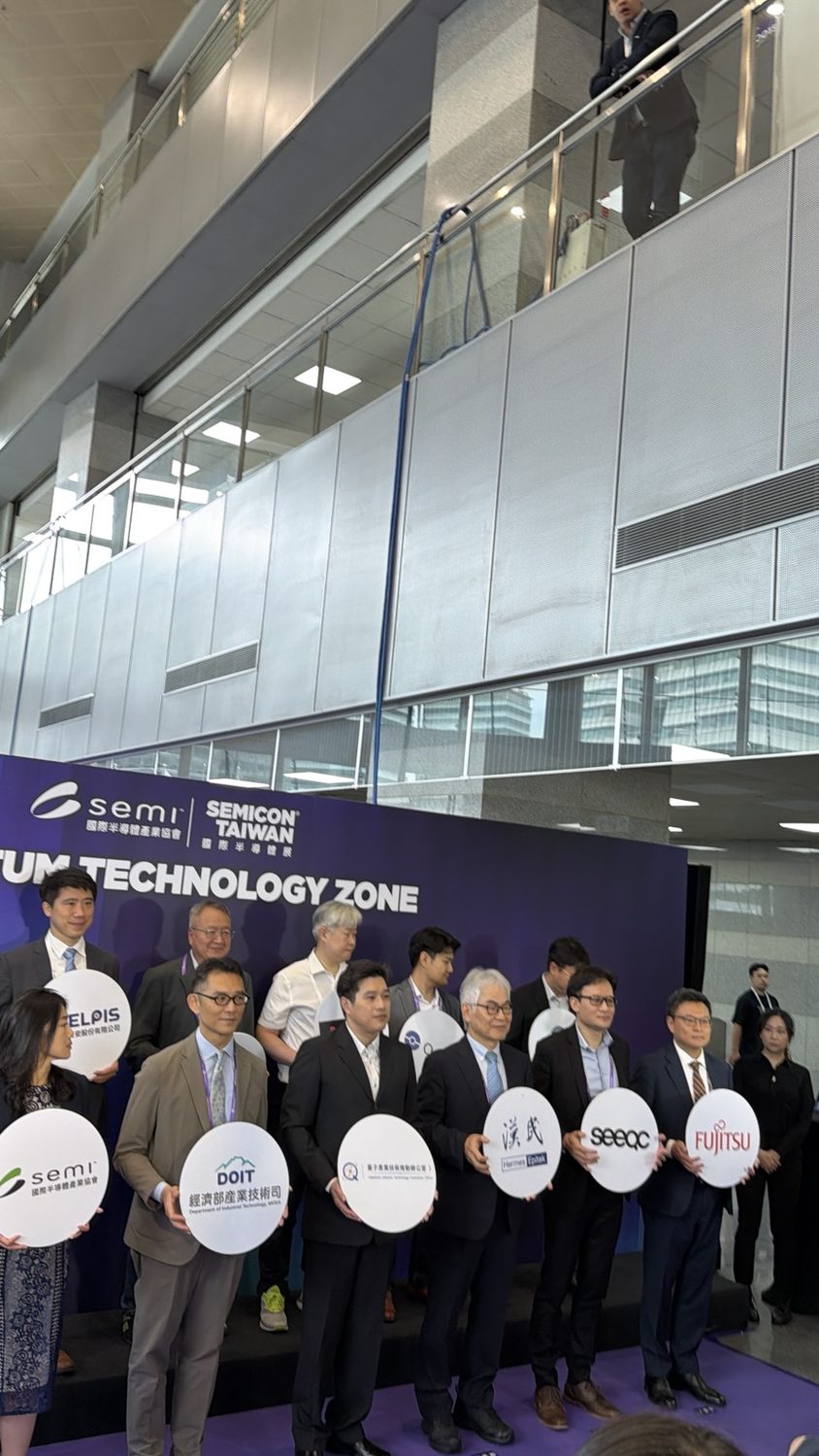
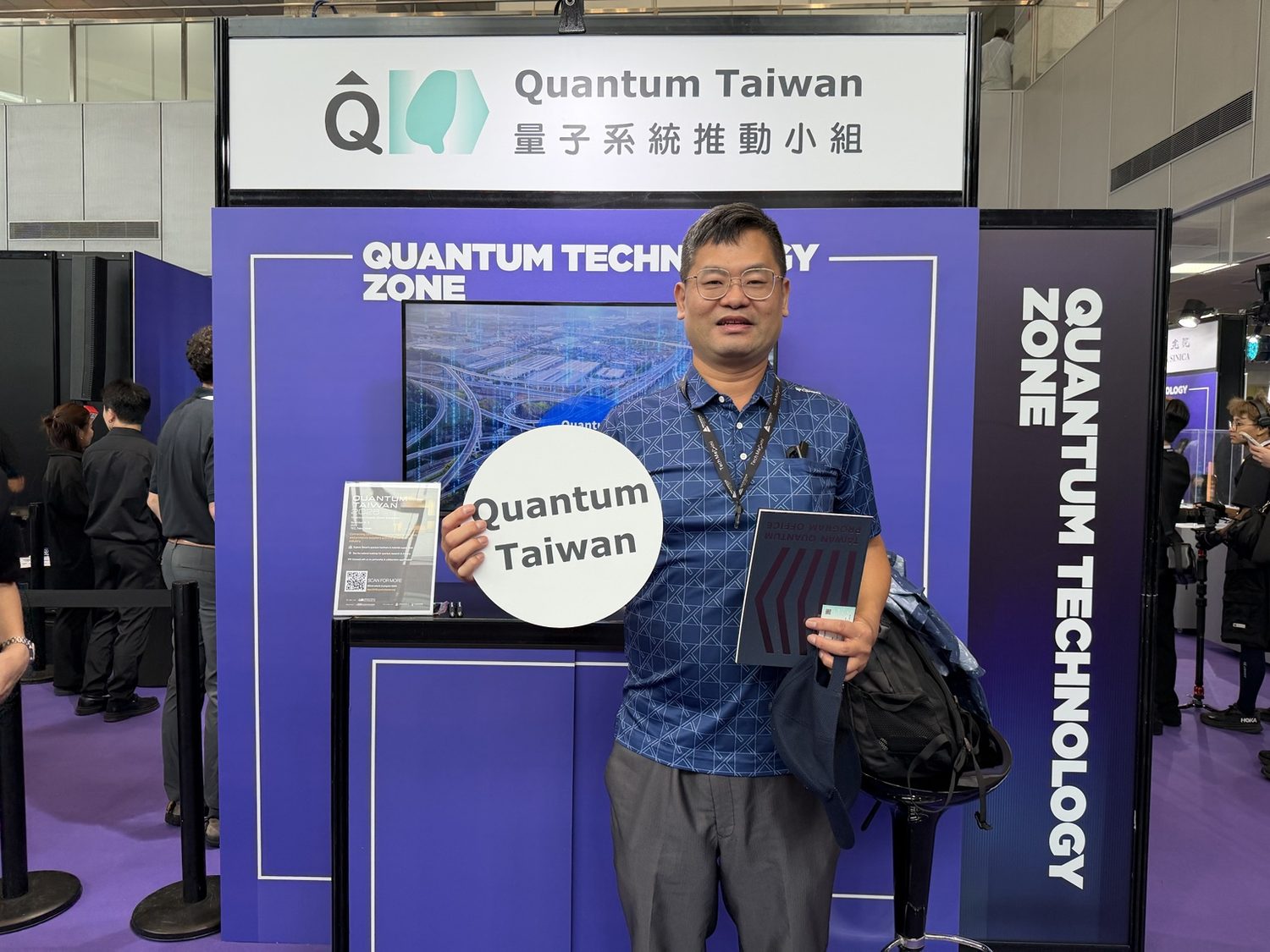
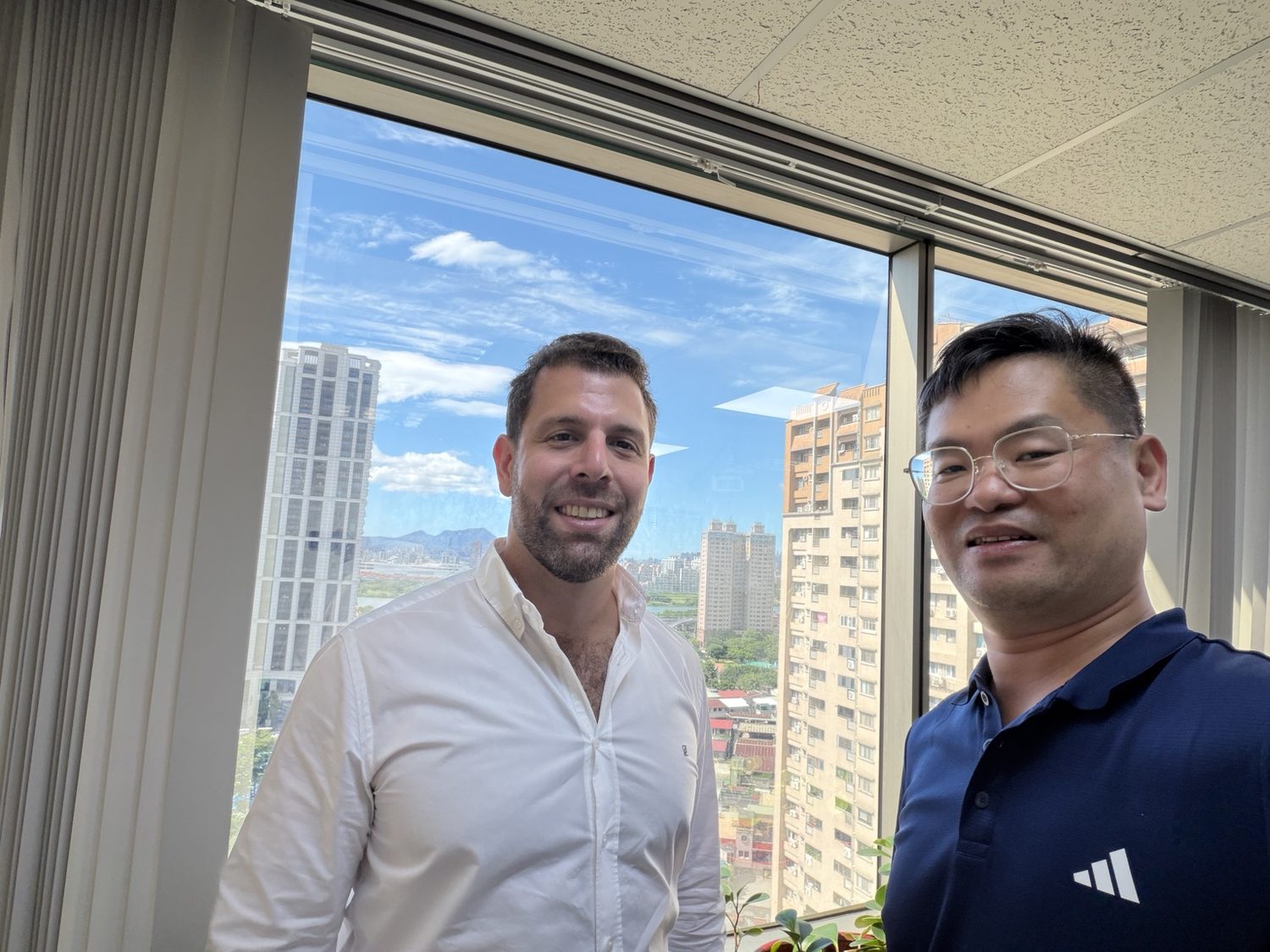
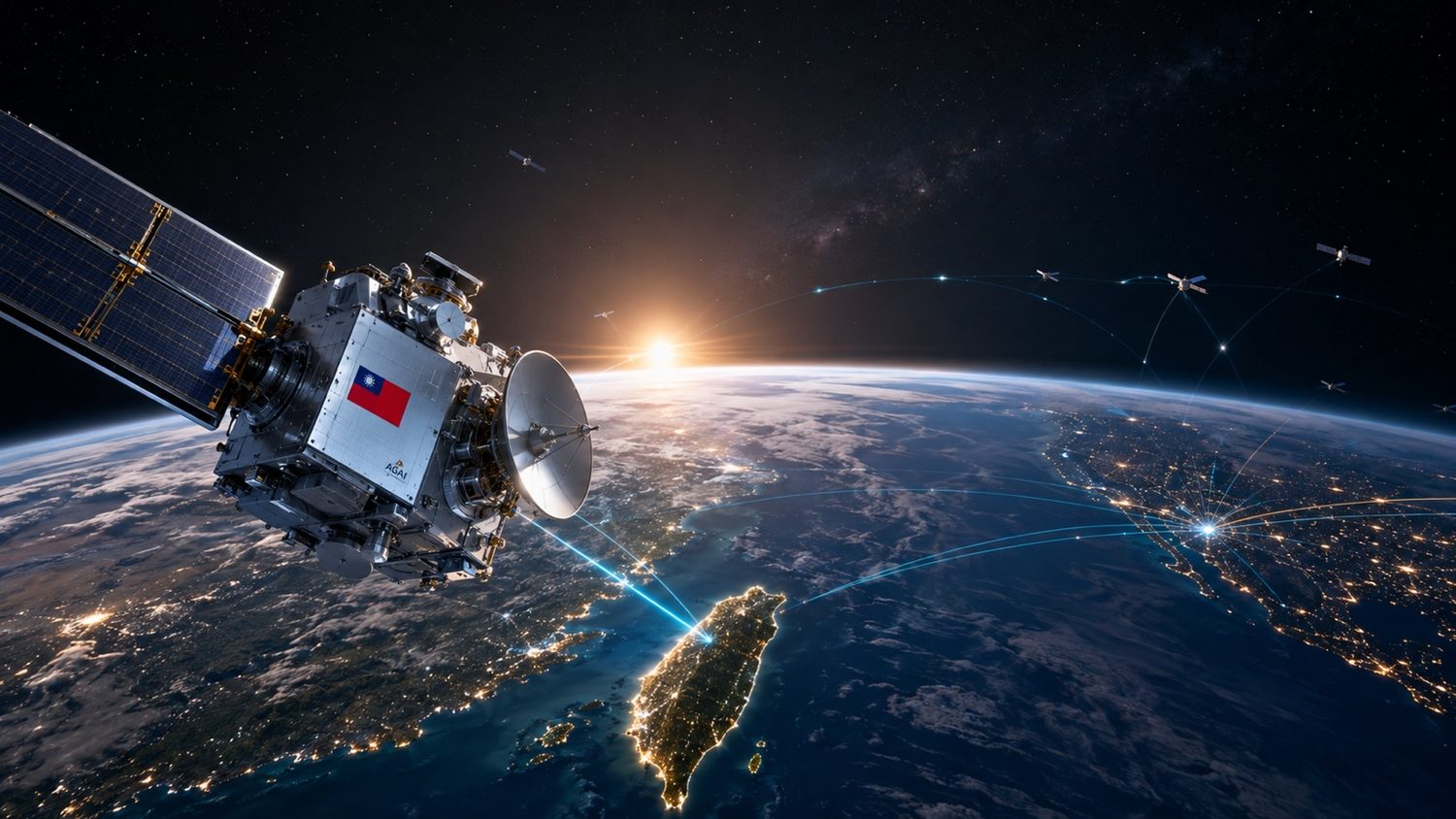
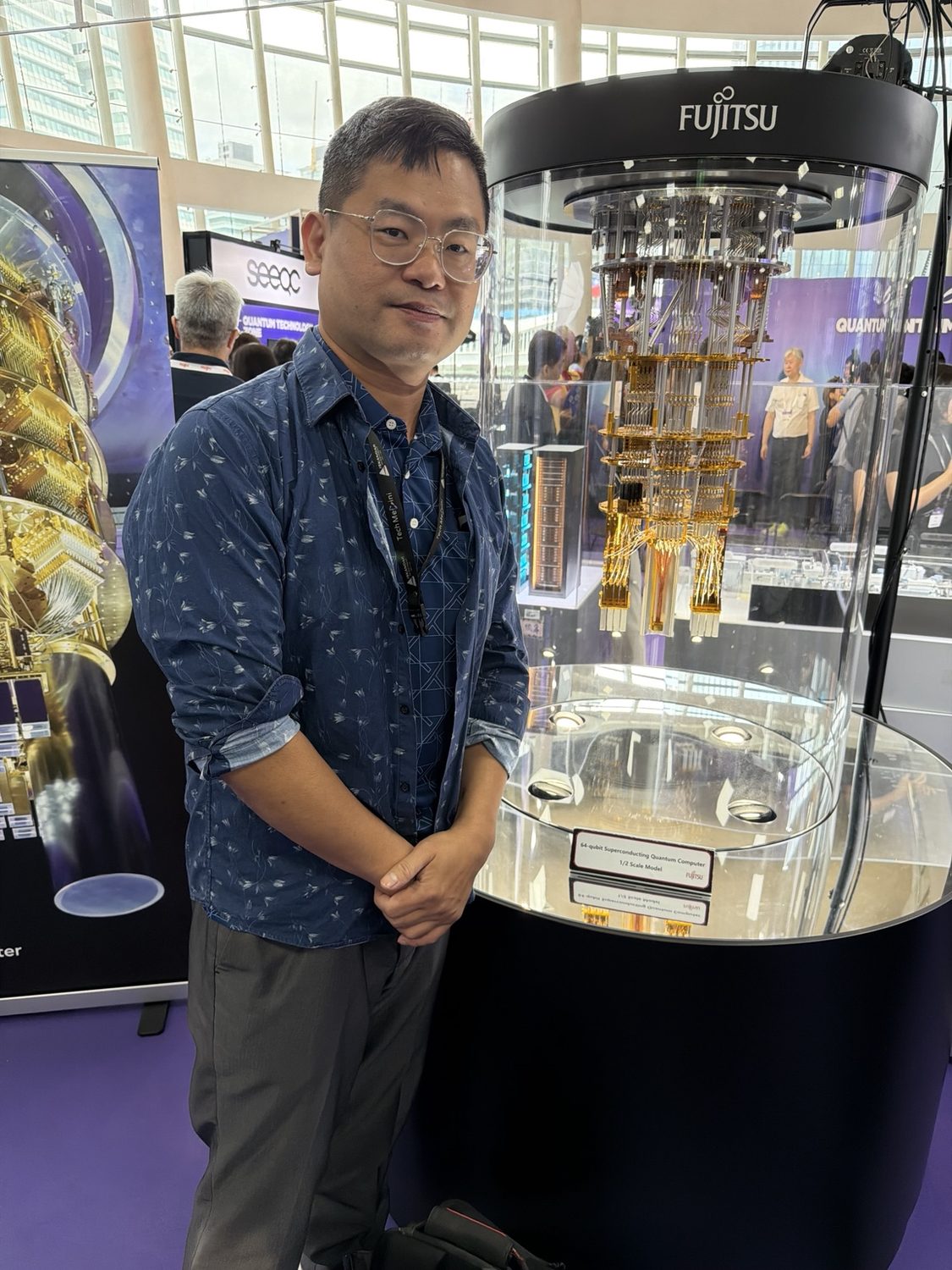
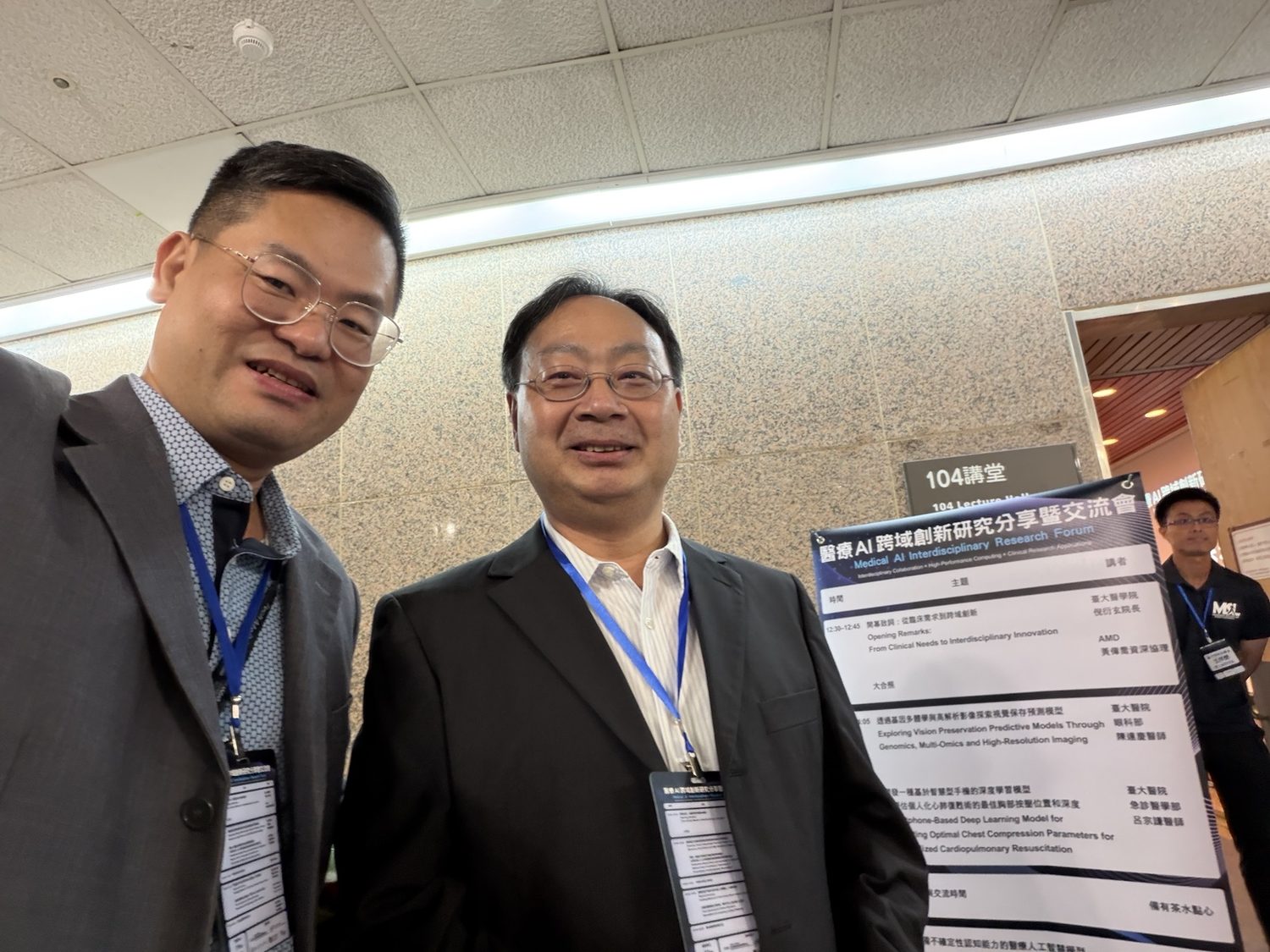
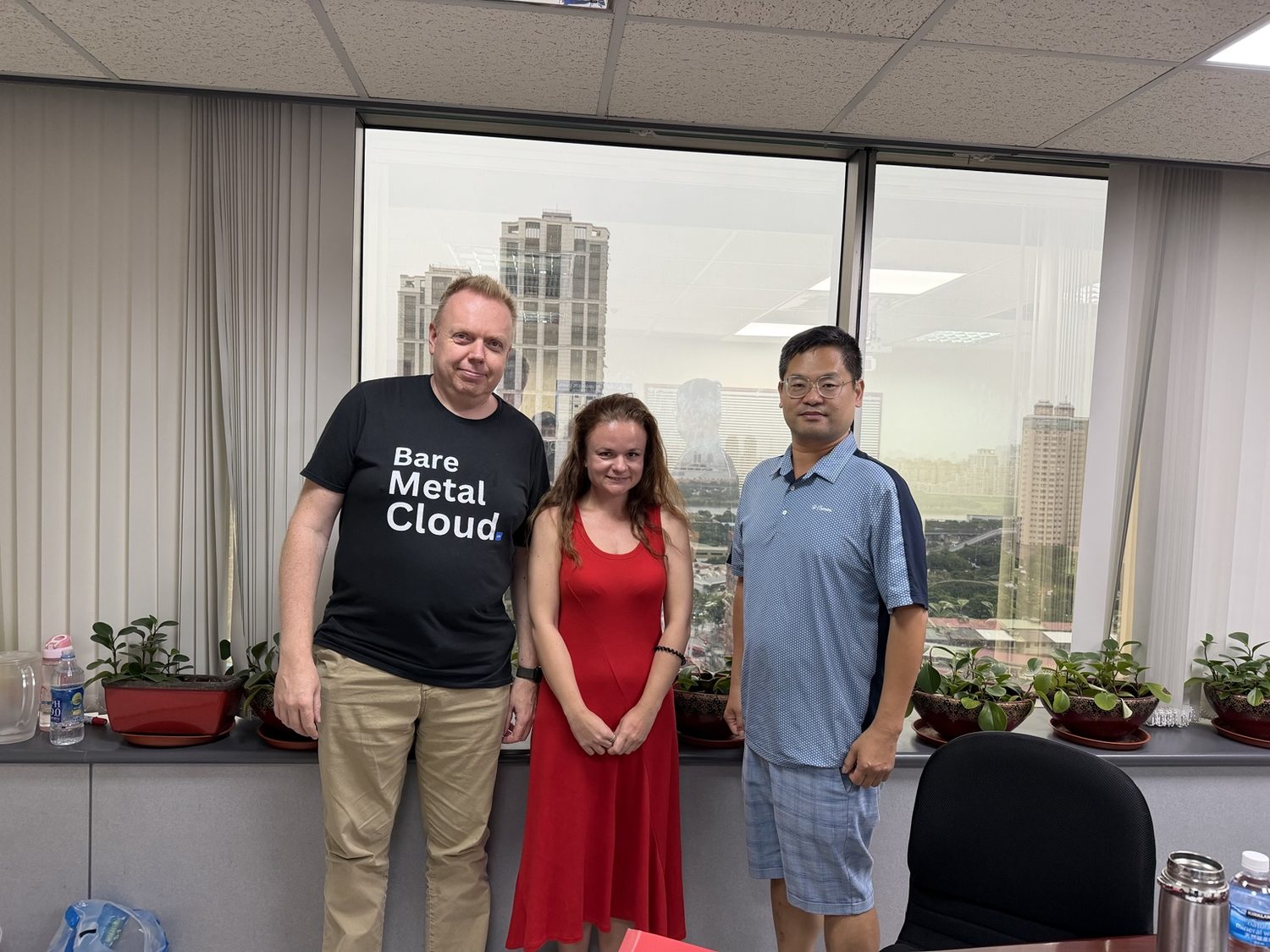
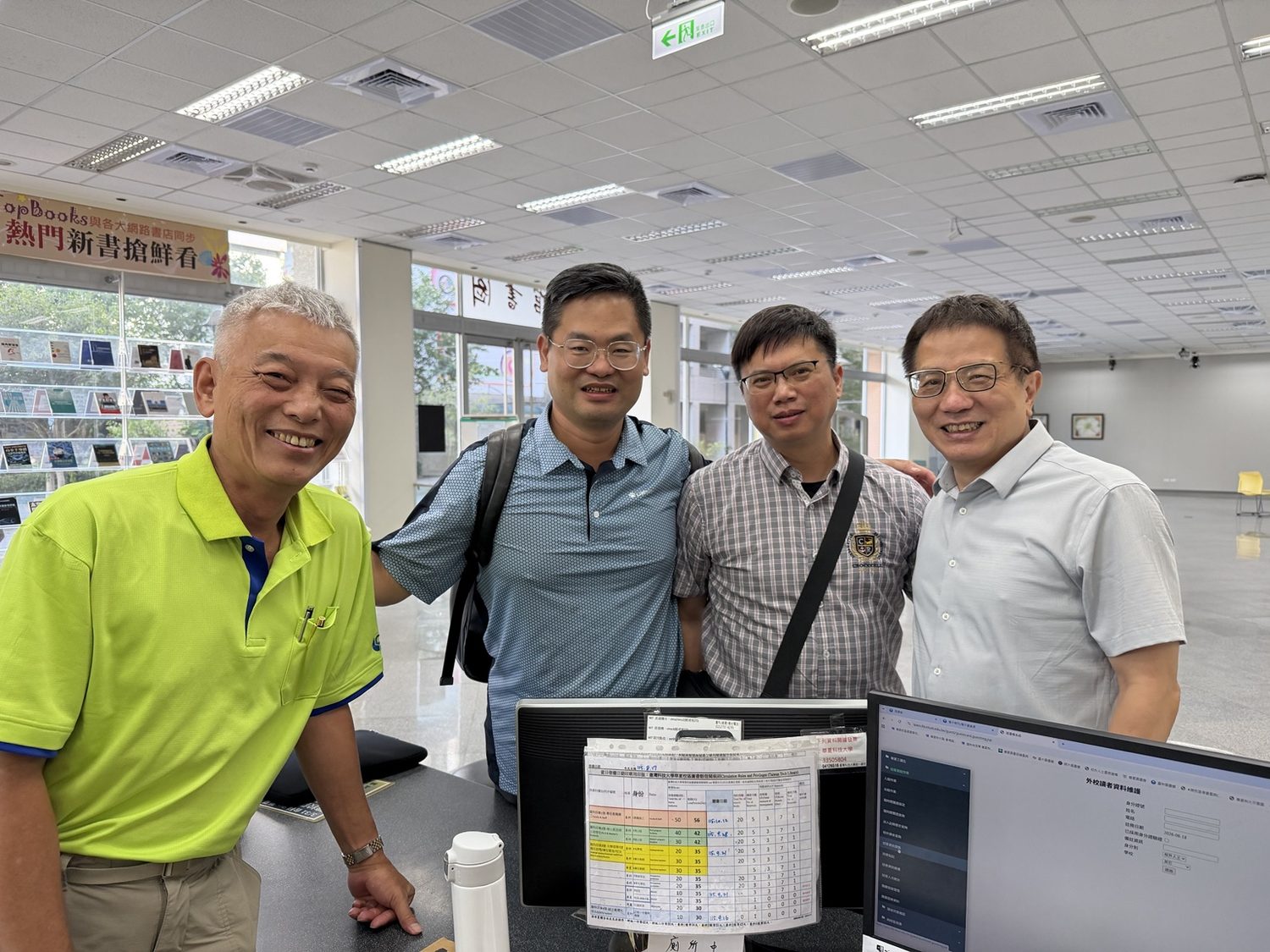
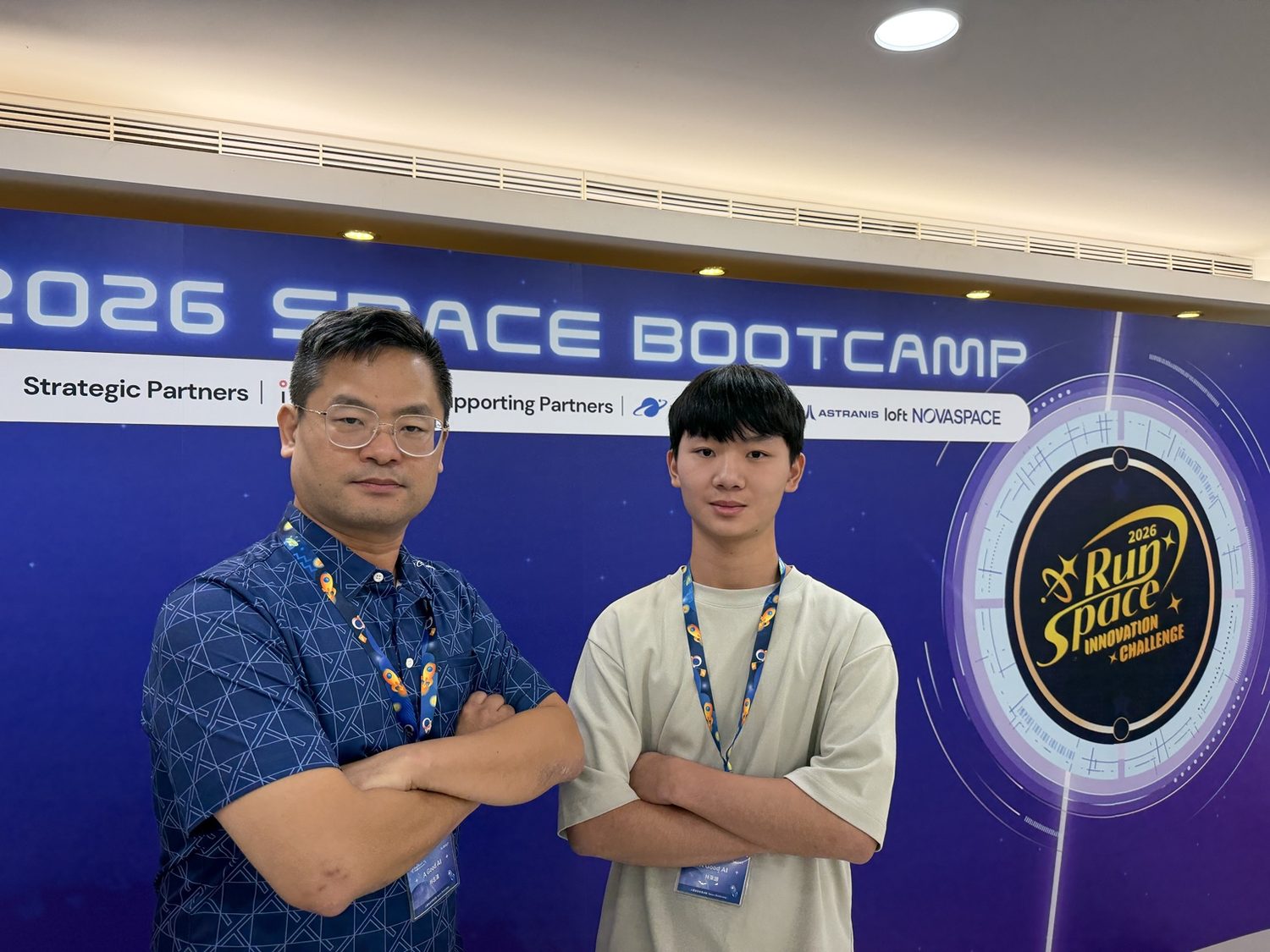
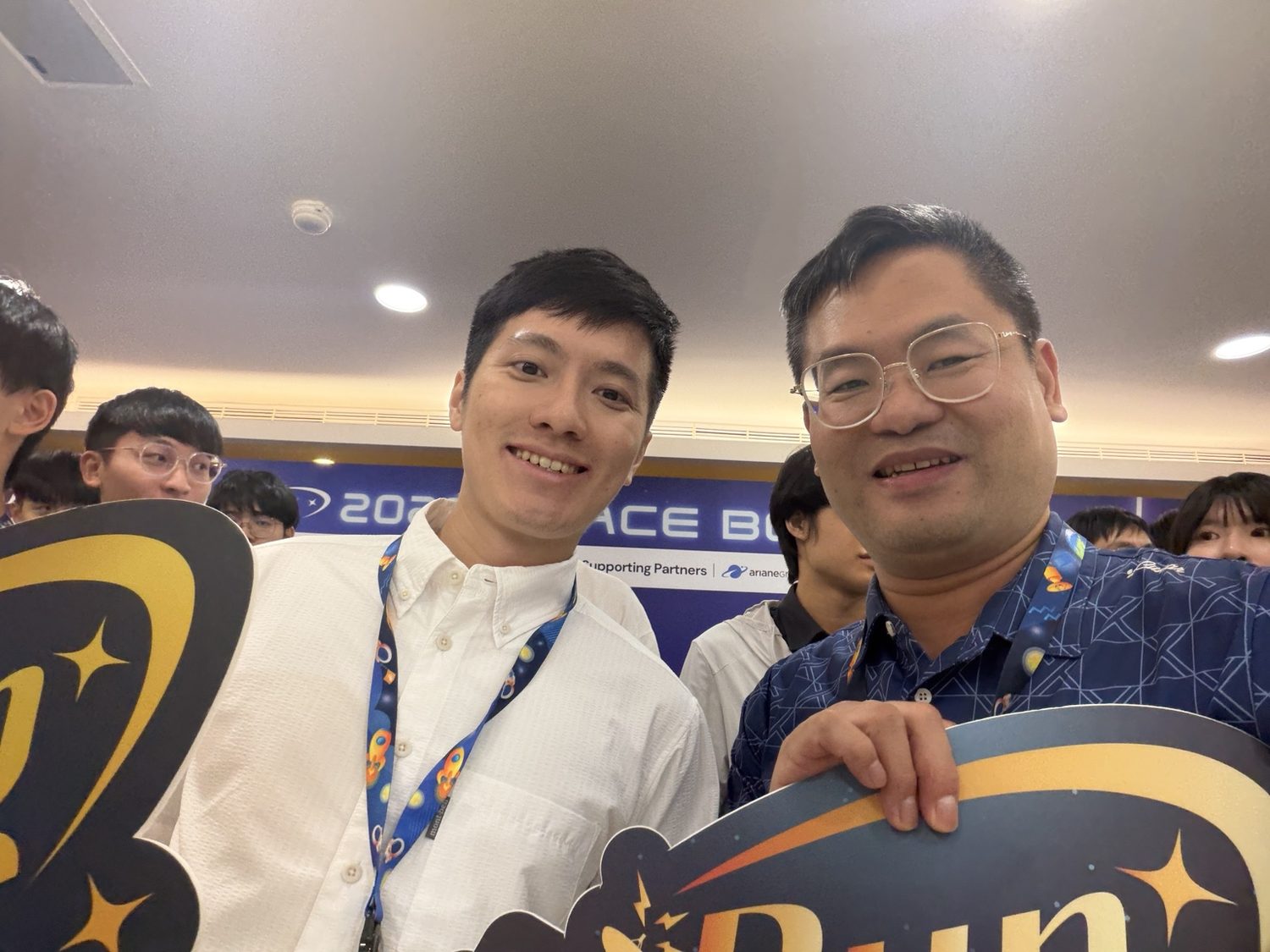
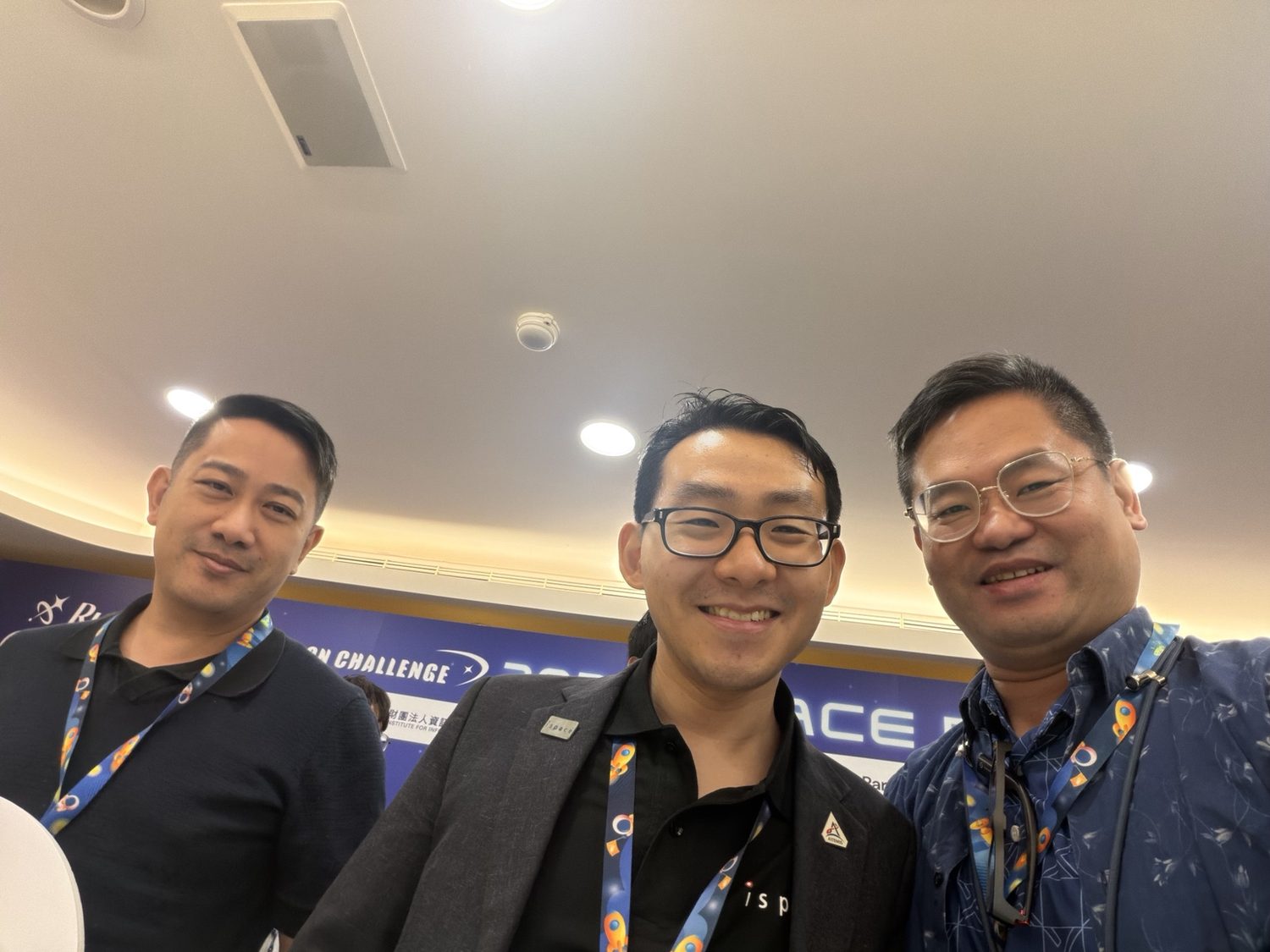
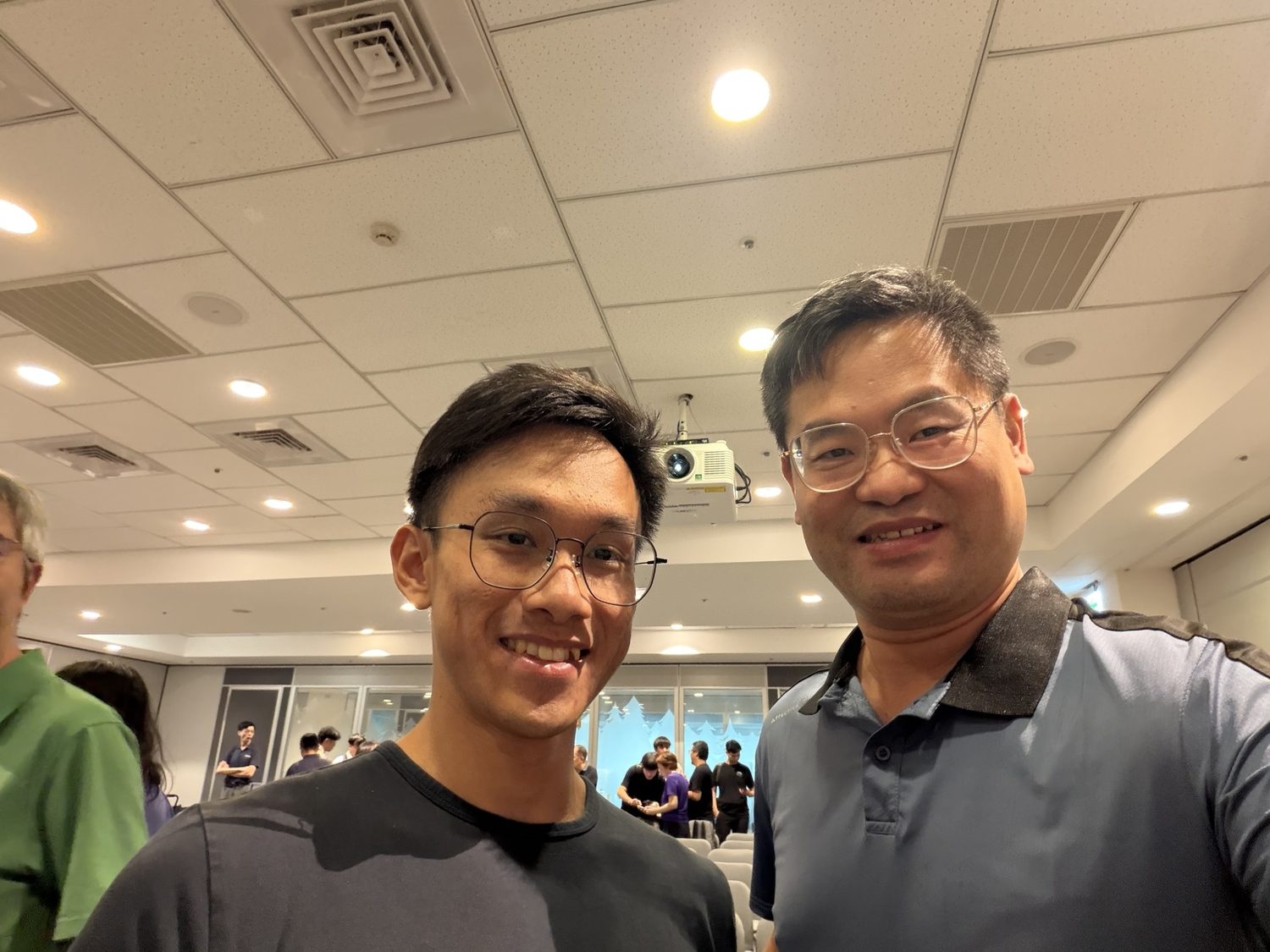
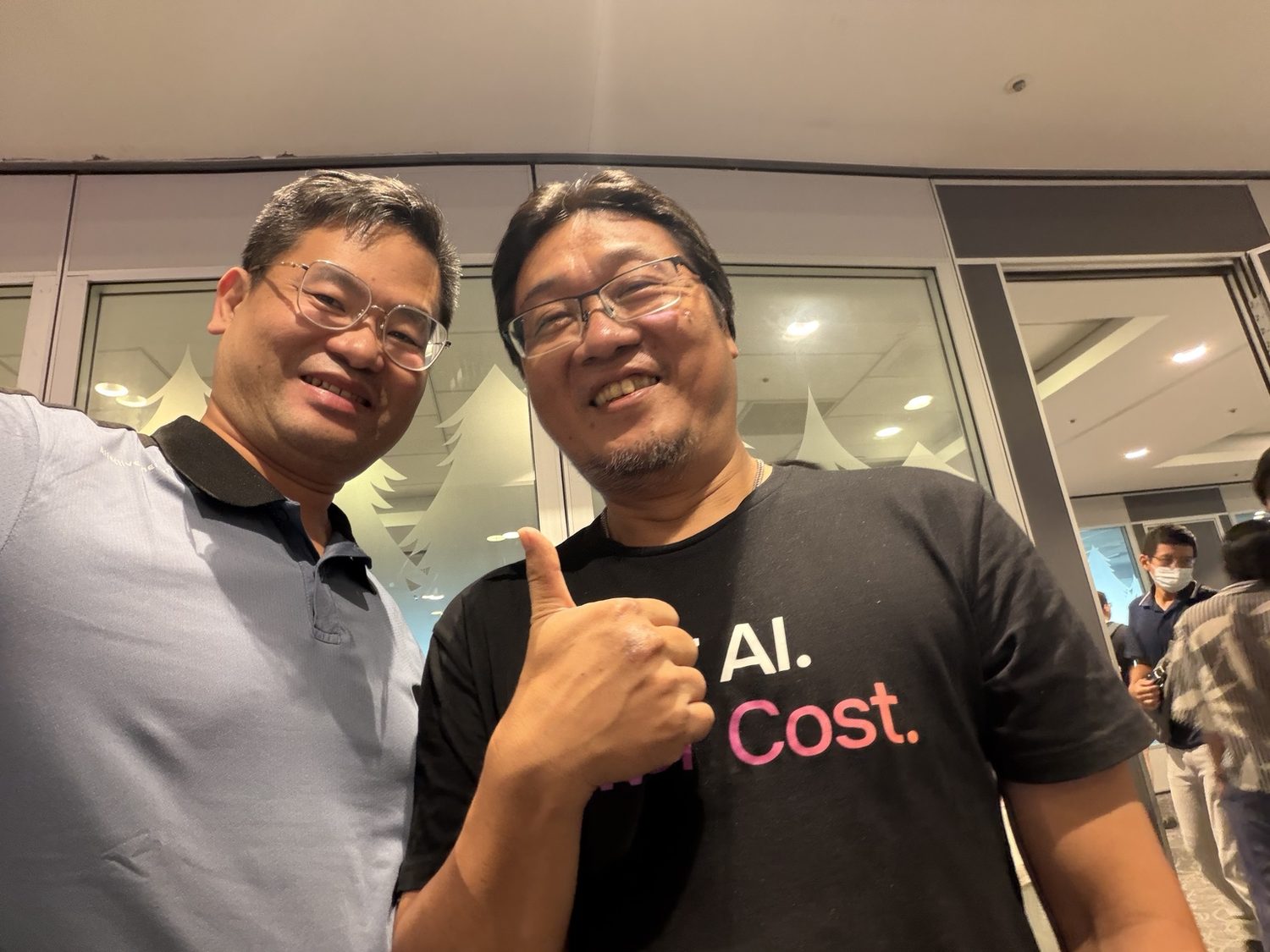
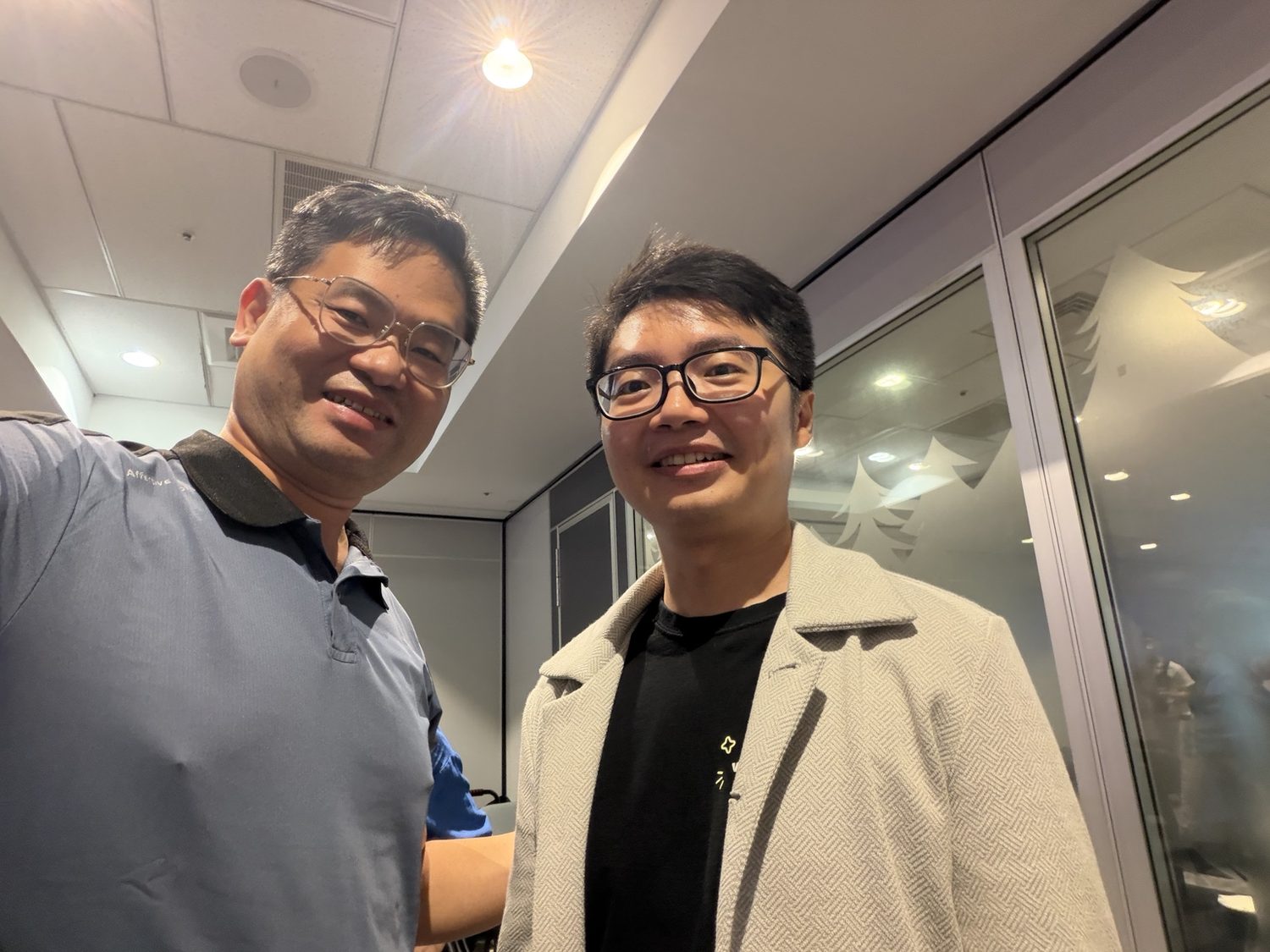
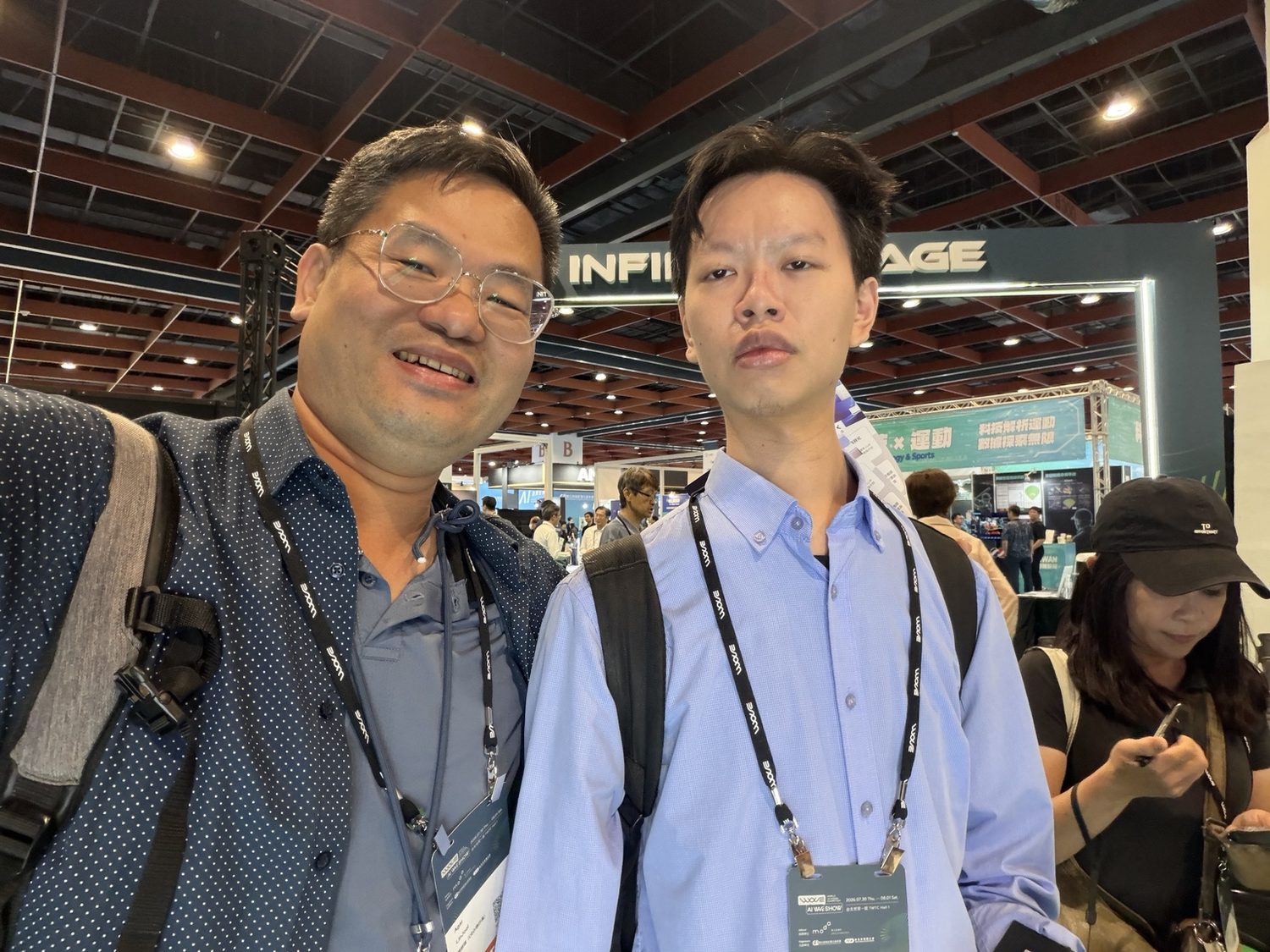
Real event photographs and AGAI concept visualizations are labeled separately. Unconfirmed participants are not named and no endorsement is implied.






The latest FORMOSAT-8 imaging release opens a higher-resolution view of familiar infrastructure and subtle environmental change. The supplied selection shows how Earth-observation imagery can support national planning, disaster resilience, environmental monitoring, agriculture and maritime awareness.
Ports, airports, cities, outlying islands, rivers and coastal landscapes are revealed through higher-resolution remote sensing. At Taipei, Taichung and Kaohsiung ports, viewers can distinguish wharf layouts, container yards and large vessels, as well as landmarks such as the Danjiang Bridge, MITSUI OUTLET PARK Taichung Port and the Great Harbor Bridge near Kaohsiung's Pier-2 Art Center. In the Changhua Coastal Industrial Park scene, even distinctive patterns across the solar-panel fields are visible. Taoyuan International Airport's nearly completed Terminal 3 and its bright orange boarding bridges can be identified from orbit. Across Penghu, Little Orchid Island and Guishan Island, the imagery records coastlines, changing water color and layered terrain. Scenes of the Qingshui Cliffs, the former Xiaolin Village area and the Taimali River estuary preserve traces of landscape change left by the April 3 earthquake and Typhoon Morakot. The image release also includes the planned national launch site at Jiupeng Village, Pingtung.
Wharves, terminals, runways, bridges and industrial layouts
Large vessels, harbor access, aquaculture and coastal use
Riverbeds, water color, shoreline texture and cloud cover
Post-disaster terrain, seasonal hydrology and construction progress
Cloud is the natural enemy of optical remote sensing. Northeastern Taiwan is frequently cloudy, so a clear acquisition can depend on timing and luck. Daily revisit capability gives the Chi Po-lin Satellite repeated opportunities.
Alternating dark and light patterns over the sea can form through monsoon winds, surface wind fields and ocean currents. Their texture helps analysts infer marine conditions at the time of acquisition.
These scenes were acquired during Taiwan's relatively dry winter season. Wide channels may contain only a narrow active flow, leaving much of the riverbed exposed.
Satellite imagery is durable Earth-observation data. It can inform land-use planning, disaster prevention and response, environmental monitoring, agricultural management and marine observation.
| Scene | What the frame records | Source |
|---|---|---|
| Taoyuan Aerotropolis | Airport runways, terminal works, transport corridors, urban fabric and surrounding ponds. | TASA · FS-8A |
| Guishan Island | Volcanic terrain, coastal form and ocean-surface texture. | TASA · FS-8A |
| Guanyin Algal Reef & Taoyuan Ponds | Coastal ecology, industrial frontage, harbor works, aquaculture and irrigation landscapes. | TASA · FS-8A |
| Changhua Coastal Industrial Park | A large photovoltaic field reveals layout, water boundaries and fine panel patterns. | TASA · FS-8A |
| Kaohsiung Port | Wharves, harbor basins, urban density and logistics infrastructure. | TASA · FS-8A |
| Taichung Port | Industrial terminals, breakwaters, vessels, storage areas and coastal development. | TASA · FS-8A |
| Little Orchid Island | An isolated island, reef edge and ocean-state patterns at high spatial clarity. | TASA · FS-8A |
| Qingshui Cliffs | Steep terrain, river fans, coastal transport lines, cloud and the Pacific shoreline. | TASA · FS-8A |
| Penghu | Island morphology, shallow-water color, settlements, fisheries and marine infrastructure. | TASA · FS-8A |
| Event | Region | Primary positioning | AGAI objective |
|---|---|---|---|
| SatelliteAsia | Singapore | Satellite communications, LEO, next-generation connectivity and SatCom | Highest-priority fit for LinkBox, multi-band resilience and PQC-secured NTN |
| Space Tech Expo Europe | Germany | Space and satellite manufacturing, components, testing and supply chain | RF modules, secure silicon, packaging, qualification and manufacturing partners |
| Space Tech Expo USA | United States | Space and satellite manufacturing, components, testing and supply chain | U.S. market validation, defense-resilience dialogue and supplier development |
| CommunicAsia | Singapore | Telecom, 5G/6G, networks, satellite and NTN integration | Position AGAI as the trusted mission layer above approved connectivity |
| ATxEnterprise | Singapore | Enterprise technology platform spanning SatelliteAsia and CommunicAsia | Meet infrastructure operators, government buyers and regional channels |
Live 137.9 MHz / 1.692 GHz / 4.148 GHz receive-chain evidence, FFT, Doppler, FEC and link health.
ML-KEM / ML-DSA hybrid security, signed telemetry, audit logs and bounded agent actions.
Move qualified visitors into agency-specific pilots with acceptance criteria, regulatory scope and paid deployment gates.
A practical equation atlas for satellite links, autonomous flight and mission decisions under uncertainty.
Evgeni B. Dynkin & Aleksandr A. Yushkevich · Plenum Press · 1969
Attribution boundary. Application notes and interactive models are authored by Joel Lin and Anderson for AGAI. The mathematics is cited to Dynkin and Yushkevich; AGAI does not claim authorship of the source text. Equations are presented without derivations, and the original volume remains the canonical reference.
Transition probabilities model movement among clear, degraded and unavailable RF states.
A generator combines commanded motion with random wind, sensor and process disturbance.
Stopping rules compare the value of waiting with the value and risk of intervention.
Harmonic, potential and boundary models turn mission envelopes into measurable constraints.
Illustrative simulations for design discussion — not flight software, certified link budgets or operational authorization.
Estimate how a primary RF path moves between Good and Degraded states before LinkBox selects an authorized alternate path.
pn+1 = pn P
Apply bounded feedback while the simulated vehicle is disturbed by a Wiener-process noise term.
dXt = (v − KXt)dt + σdWt
Compare the immediate value of a verified observation with the discounted value of waiting for more evidence.
V(x) = supτ Ex[e−rτ g(Xτ)]
One more observation has a delay-adjusted value of 70, above the immediate value of 68.
AI recommends · authorized human decides · every action is logged
| Model family | AGAI use | Demo evidence | Production gate |
|---|---|---|---|
| Transition function | Multi-band link state | Recorded state sequence | Independent field logs |
| Generator / Dynkin formula | Vehicle risk forecast | Seeded simulation trace | Hardware-in-loop validation |
| Optimal stopping | Alert and handover timing | Threshold sensitivity | Approved operating policy |
| Boundary problem | Geofence / safety envelope | Exit-probability map | Certified flight controls |
We created 100 fictional personas, assigned them sector-specific roles and asked a common set of questions about feasibility, procurement, security, workforce change and proof. Responses were synthesized and edited for diversity of viewpoint.
Satellite for All · Synthetic editorial prototype · © 2026 AGAI
Source media held in the project directory and embedded directly. No external host, no transcoding, no re-upload.
Local embed
Original feed
Source file preserved
Held in-repository